Mongolian Names: Traditional Meanings and Cultural Significance
Mongolian names carry deep connections to nature, history, and personal virtues that have shaped the culture of Mongolia for centuries. These names often draw inspiration from the vast landscapes, powerful animals, and important qualities valued by Mongolian people.
Parents choosing Mongolian baby names find meanings tied to strength, beauty, wisdom, and the natural world. The naming traditions have evolved over time, but they maintain strong links to Mongolian identity and values, similar to many traditional naming cultures found in Scottish names and French names.
Whether someone seeks a name for a child, a character, or simply wants to learn about this rich tradition, understanding the cultural significance behind these names adds depth to the selection process. This guide explores traditional and contemporary Mongolian names across different categories, including options for girls and boys, family names, historical choices, and modern variations.
Readers will discover names like Temujin, Altantsetseg, Batbayar, Enkhjargal, Narangerel, Sarnai, Bold, Tserendorj, Oyunbileg, Ganbold, Khulan, Munkhjargal, Badamtsetseg, Erdenebaatar, and Tsetsegmaa. Guidance on selecting meaningful names that honor Mongolian culture is also provided.
Fantasy Mongolian names draw from traditional naming patterns while adding creative elements for fictional characters. These names work well for warriors, nomadic heroes, and mystical characters in stories and games.
Traditional Mongolian names often combine two words that describe qualities, animals, or natural elements. Fantasy versions follow this pattern but may emphasize strength, mystery, or supernatural traits.
Writers can mix real Mongolian word roots with invented elements to create authentic-sounding names.
Fantasy Mongolian Names
Male Fantasy Names:
- Batmunkh – strong and eternal warrior
- Khenbayar – joyful wolf spirit
- Tomorbaatar – iron-strong hero
- Enkhtulga – peaceful fire bearer
- Zoriktai – brave falcon rider
- Ganbaatar – steel warrior
- Khuyagbold – armored protector
- Sarnaikhuu – rose-born son
- Munkhjargal – eternal happiness bringer
- Tserenlkham – long-lived guardian
Don’t Miss Amazon’s Today’s Deals
Grab the hottest discounts before they’re gone! Explore daily deals, limited-time offers, and exclusive savings on your favorite products — updated every single day.
As an Amazon Associate, I earn from qualifying purchases.
Female Fantasy Names:
- Altansarnai – golden rose maiden
- Oyuntsetseg – wisdom flower
- Narangerel – sunlight bearer
- Saikhanbileg – beautiful gift
- Tuyatsetseg – ray flower
- Enkhjargal – peaceful fortune
- Dolgormaa – wave mother
- Bayarmaa – joy bringer
- Nomiinsuren – book spirit
- Tselmeg – crystal clear one
These names maintain Mongolian linguistic structure while serving fantasy storytelling needs. Each name carries meaning related to nature, personal qualities, or ancestral wisdom.
Mongolian Girl Names
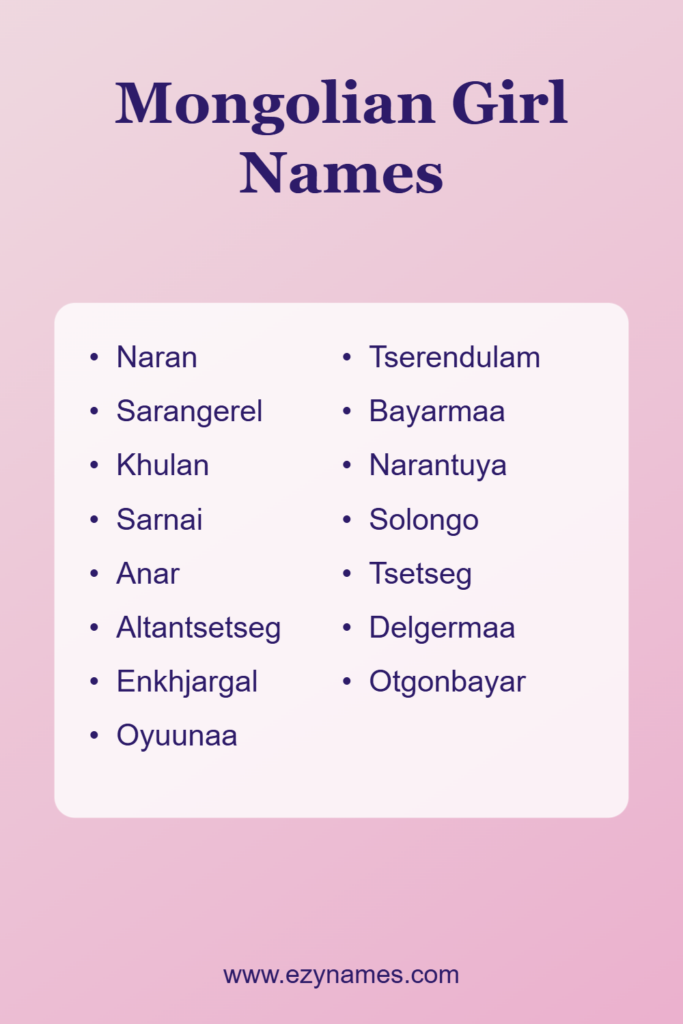
Mongolian girl names carry deep meanings connected to nature, virtues, and cultural values. These names often reference elements like the sun, moon, flowers, and animals that hold special meaning in Mongolian tradition.
Many Mongolian names for girls express qualities parents hope their daughters will have. Names may represent strength, beauty, purity, or wisdom.
Others draw from the landscape of the steppes and the natural world that surrounds Mongolian life.
Popular Mongolian Girl Names:
- Naran – means “sun” and represents warmth and light
- Sarangerel – means “moonlight” and symbolizes gentle beauty
- Khulan – means “wild horse” and represents freedom and spirit
- Sarnai – means “rose” and connects to natural beauty
- Anar – means “pomegranate” and symbolizes abundance
- Altantsetseg – means “golden flower” and represents precious beauty
- Enkhjargal – means “peaceful happiness” and expresses contentment
- Oyuunaa – means “turquoise wisdom” and combines beauty with intelligence
- Tserendulam – means “long life” and carries wishes for longevity
- Bayarmaa – means “mother of joy” and celebrates happiness
- Narantuya – means “sun ray” and symbolizes bright energy
- Solongo – means “rainbow” and represents hope and beauty
- Tsetseg – means “flower” and connects to natural elegance
- Delgermaa – means “abundant mother” and symbolizes prosperity
- Otgonbayar – means “youngest joy” and celebrates new beginnings
Each name tells a story about what matters most in Mongolian culture.
Mongolian Boy Names
Mongolian boy names carry deep meaning from the country’s nomadic history and spiritual beliefs. These names often reflect qualities like strength, bravery, and connections to nature.
Parents choose them to honor ancestors or represent hopes for their child’s future. Many traditional names remain popular today, similar to naming traditions explored in broader collections of boy names.
Baatar means hero or warrior, representing courage and strength. Bayar translates to joy or celebration, bringing positive energy to a child’s identity.
Other meaningful options include Erdene (precious or treasure) and Enkbat (peaceful strength). Names often draw from natural elements and animals.
Temujin was Genghis Khan’s birth name, meaning blacksmith. Altan means golden, while Chingis honors the great khan himself.
Batbold combines hero with steel, suggesting an unbreakable warrior spirit. Modern Mongolian parents appreciate names that blend tradition with contemporary appeal.
Ganbold means steel treasure, Khenbish means nobody, and Otgonbayar joins youngest with joy. Erdenebat combines precious with strong.
Nature-inspired choices include Sarnai (rose), Tenger (sky), and Delger (abundant). Tseren means long life, Munkh represents eternal, and Sukhbaatar combines axe with hero.
Boldbaatar pairs steel with warrior, while Ganzorig means steel courage.
Last Name Mongolian Names
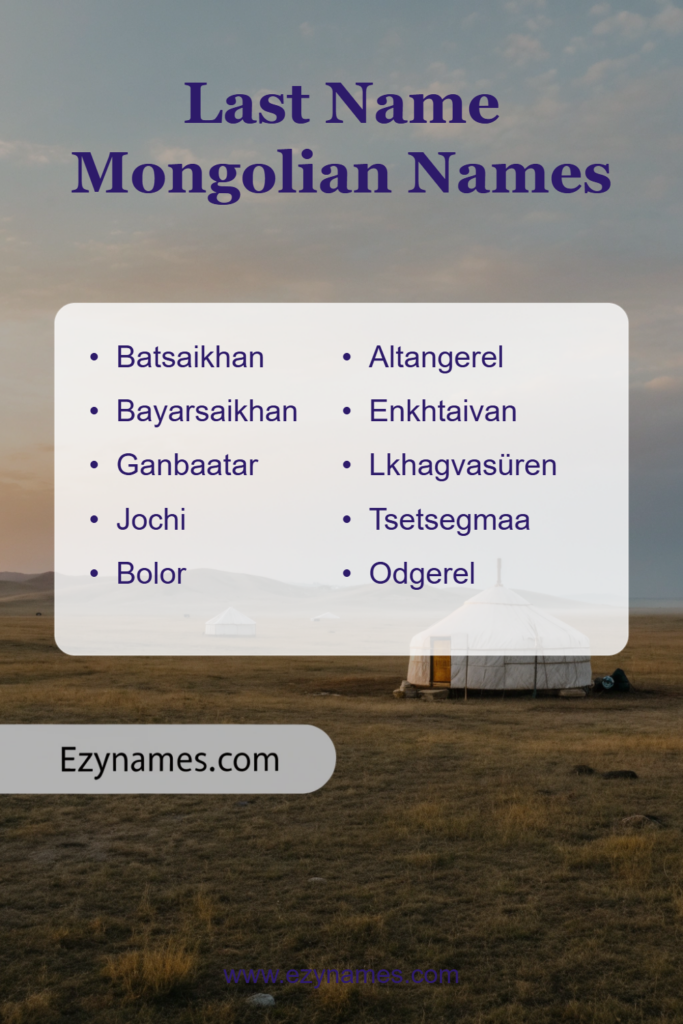
Mongolian surnames carry deep cultural meaning and historical significance. These names often reflect virtues, natural elements, or connections to powerful clans from Mongolia’s past.
Traditional Mongolian last names differ from Western naming conventions. Parents or respected elders typically chose names with positive meanings to bring good fortune to children.
Many surnames trace back to prominent individuals or important families in Mongolian history, similar to surname traditions discussed in last names for characters.
Common Mongolian Last Names:
- Ganbold – combines “gan” (steel) with “bold” (steel), suggesting strength
- Batbayar – means “strong joy” or “firm happiness”
- Baatar – translates to “hero” or “warrior”
- Ganbaatar – combines “steel” with “hero”
- Bayarsaikhan – means “good joy” or “beautiful happiness”
- Altangerel – translates to “golden light”
- Lkhagvasüren – means “Wednesday majesty”
- Batsaikhan – combines “firm” with “good”
- Bolor – means “crystal” or “clear”
- Odgerel – translates to “star light”
- Enkhtaivan – means “peaceful peace”
- Tsetsegmaa – translates to “flower mother”
- Erdenebat – means “jewel firm”
- Sukhbaatar – combines “axe” with “hero”
- Dorjsuren – means “diamond majesty”
Explore Everything & Shop by Interest
From fashion and tech to books and home essentials — Amazon has it all in one place. Start your shopping journey today and discover something new every time you visit!
As an Amazon Associate, I earn from qualifying purchases.
Mongolian surnames emphasize qualities that families valued. Names referring to strength, light, happiness, and precious materials appear frequently.
Old Mongolian Names
Old Mongolian names came from the time of ancient warrior tribes and empires. These names often reflected strength, nature, and tribal identity.
Many were connected to the vast steppes and the nomadic way of life. Temujin stands as one of the most famous old Mongolian names.
This was the birth name of Genghis Khan before he became the great leader. The name carried significance in Mongol history and represented the beginning of the largest land empire ever created.
Ancient Mongolians often chose names based on what they valued most. Warriors received names that showed power and bravery.
Kublai Khan, grandson of Genghis Khan, bore a name that became legendary throughout Asia and beyond.
Notable Old Mongolian Names:
- Temujin – Birth name of Genghis Khan
- Subutai – Famous Mongol general
- Jochi – Eldest son of Genghis Khan
- Chagatai – Second son of Genghis Khan
- Ögedei – Third son and successor of Genghis Khan
- Tolui – Youngest son of Genghis Khan
- Börte – Wife of Genghis Khan
- Jamukha – Childhood friend of Temujin
- Kublai – Emperor who founded Yuan Dynasty
- Möngke – Fourth Great Khan
- Batu – Founder of the Golden Horde
- Toghrul – Khan who helped young Temujin
- Sorkhokhtani – Influential Mongol princess
- Yesügei – Father of Genghis Khan
- Hoelun – Mother of Genghis Khan
The name Tenger appeared in old Mongolian culture as well. It referred to the sky or heaven in traditional Mongol belief systems.
Many names incorporated references to natural elements and spiritual concepts that mattered to the ancient people.
Funny Mongolian Names
Mongolian names traditionally combine words that describe positive qualities, natural elements, or aspirations for a child. However, some combinations can sound amusing to non-Mongolian speakers or create unexpected meanings when translated.
Names That Sound Playful
Some Mongolian names have sounds or meanings that might seem funny in other languages:
- Batbold – Strong and steel
- Terbish – Not that one
- Chuluun – Stone
- Gantulga – Steel bell
- Naranbaatar – Sun hero
- Munkhjargal – Eternal happiness
- Tsetseg – Flower
- Bayarmaa – Mother of joy
- Demberel – Highest level
- Khulan – Wild donkey
- Sarantsatsral – Moon light beam
- Boldbaatar – Steel hero
- Erdenechimeg – Jewel ornament
- Otgonbayar – Youngest joy
- Tsogtbaatar – Shining hero
Khulan often surprises English speakers because it refers to the noble Mongolian wild ass, a respected animal in the region. The name represents strength and freedom rather than anything negative.
Names like Munkhjargal can be challenging for non-Mongolian speakers to pronounce, which sometimes leads to humorous attempts. The complexity of sounds and letter combinations makes these names memorable.
ManyNames that seem playful or unusual to outsiders often carry meaningful symbolism, similar to how themed collections like circus names may sound entertaining while holding purpose.
Modern Mongolian Names
Modern Mongolian names blend traditional elements with contemporary influences. Parents today often choose names that honor their heritage while fitting into a global society.
Many modern names draw from nature, history, and spiritual concepts. Popular choices include Altan (golden), which symbolizes value and prosperity.
Erdene means precious or jewel, representing something treasured. Gerel translates to light, suggesting brightness and hope.
Munkh is another common choice, meaning eternal or everlasting. Delger signifies abundance or prosperity, reflecting positive aspirations for a child’s future.
Contemporary Mongolian parents also select names inspired by:
- Temujin – the birth name of Genghis Khan
- Bataar – meaning hero or warrior
- Sarnai – translating to rose
- Narangerel – combining sun and light
- Enkhjin – meaning peaceful truth
- Tsolmon – representing Venus or bright star
- Khishig – translating to blessing
- Oyunbileg – meaning wisdom gift
- Gantumur – steel strong
- Naranbat – sun firm
Best Grocery Deals Today
Find amazing daily grocery offers on fresh produce, organic selections, and essential household products at unbeatable prices, helping you save more on every shopping trip.
As an Amazon Associate, I earn from qualifying purchases.
These names maintain cultural connections while adapting to modern times.
Some families also explore naming inspiration from broader categories such as superhero names or fantasy-based naming styles to understand modern trends.
- Bayarmaa – joy mother
- Bolormaa – crystal mother
- Tuvshin – meaning foundation
- Enkhtaivan – peaceful peace
- Sarantsatsral – moon beam
Tips on Choosing the Best Mongolian Names
Parents should consider pronunciation when selecting a Mongolian name. Some names work well in multiple languages, while others may be difficult for non-Mongolian speakers to say correctly.
Traditional Mongolian names often connect to nature, strength, or positive qualities. Names like Temujin (meaning iron worker), Altantsetseg (golden flower), and Batbayar (strong joy) carry deep cultural significance.
Enkhjargal (peaceful happiness) and Bayarmaa (joyful mother) reflect positive wishes for the child’s future. The timing of naming matters in Mongolian culture.
Families traditionally choose names within three days of birth, treating the selection as a favorable omen for the child’s life. Here are meaningful Mongolian name options to consider:
- Sukhbat – strong axe
- Narangerel – light of the sun
- Ganzorig – steel courage
- Oyunbileg – wisdom gift
- Tsolmon – bright Venus
- Erdenekhuu – precious boy
- Sarantuya – moon beam
- Munkhjargal – eternal happiness
- Khaliun – gentle one
- Bayartsetseg – flower of joy
- Otgonbayar – youngest joy
- Tuvshinbayar – peaceful happiness
- Delgermaa – abundant mother
- Chuluunbaatar – stone hero
- Nergui – no name (traditional protective name)
Parents may want to check how the name sounds with their family name. They should also research the meaning to ensure it matches their hopes for their child.
Some families blend traditional and modern elements by choosing names that honor heritage while fitting into contemporary society.
Frequently Asked Questions
Mongolian names reflect centuries of nomadic tradition, spiritual beliefs, and connections to nature. These names carry specific meanings related to strength, beauty, celestial bodies, and the natural world that surrounded Mongolian communities.
What are common characteristics of Mongolian male names?
Mongolian male names are deeply rooted in history, culture, and the traditional values of the Mongolian people. Influenced by nomadic life, ancient beliefs, and centuries of warrior heritage, these names often reflect strength, protection, nature, and personal destiny. Unlike many Western naming traditions, Mongolian names frequently carry symbolic meaning meant to shape a child’s future.
Strength and Power
One of the most common characteristics of Mongolian male names is their emphasis on strength and resilience. Many names are derived from words meaning strong, brave, iron, hero, or warrior. This reflects Mongolia’s long history of horsemen, soldiers, and leaders, where physical endurance and courage were essential for survival.
Connection to Nature
Mongolian culture is closely tied to the natural world, and this connection is clearly visible in male names. Many names are inspired by animals, landscapes, and natural forces such as wolves, mountains, rivers, wind, and the sky. These names symbolize freedom, endurance, and harmony with nature—values central to nomadic life.
Protective and Spiritual Meanings
Traditionally, Mongolian parents chose names not just for identity but for protection. Some male names were intentionally unusual or humorous to ward off evil spirits and bring good fortune. Others were inspired by Buddhist beliefs, incorporating words related to peace, wisdom, or enlightenment.
Historical and Warrior Influence
Mongolian male names often echo the legacy of famous leaders and warriors, especially from the era of the Mongol Empire. Names associated with leadership, victory, and honor remain popular, reflecting pride in national history and ancestry.
Descriptive and Meaning-Focused
Unlike names chosen purely for sound, Mongolian male names are often descriptive. They may reflect a child’s personality, physical traits, or the hopes parents have for their future. It’s common for a name to convey a complete idea rather than just a label.
Modern Adaptations
While traditional meanings remain important, modern Mongolian male names may be shorter, easier to pronounce internationally, or influenced by global culture. However, even modern names usually retain a meaningful connection to strength, identity, or heritage.
Unique and Distinctive
Mongolian male names are often unique, with less repetition compared to many other cultures. This individuality reflects the importance of personal identity within Mongolian society, where a name is seen as a powerful and personal symbol.
What are some traditional Mongolian names for females?
Traditional Mongolian female names often reference beauty, precious materials, and celestial elements. Sarangerel means “moonlight” and represents the luminous beauty of the night sky.
Tsetseg translates to “flower” and symbolizes natural beauty and growth. Altantsetseg combines “golden” and “flower” to create a name meaning “golden flower.”
Enkhjargal means “peaceful happiness” and reflects wishes for a peaceful life. Oyuntsetseg translates to “wisdom flower,” combining intelligence with natural beauty.
Narantsetseg means “sun flower” and connects the bearer to solar energy. Bayarmaa combines concepts of joy and celebration.
Tsolmon means “morning star” and represents hope and new beginnings.
Mongolian male names frequently emphasize strength, courage, and natural power. These names often reference animals known for their might, metals valued for durability, or qualities admired in warriors and leaders.
Batbayar means “strong joy” and combines physical strength with happiness. Erdenebaatar translates to “jewel hero” and suggests both value and bravery.
Temuulen means “iron” and represents unbreakable strength. Boldbaatar combines “steel” and “hero” to emphasize warrior qualities.
Ganzorig translates to “steel courage” and emphasizes bravery. Narangerel means “sunlight” and connects to solar imagery.
Sukhbaatar means “axe hero” and references both a weapon and heroic qualities. Davaasuren means “Monday victory” and connects success to specific timing.
How do Mongolian last names typically differ from first names in structure or origin?
Mongolian naming traditions differ significantly from Western surname systems.
Mongolia uses a patronymic system where children take their father’s first name as their last name, rather than inheriting a fixed family surname that passes through generations.
A person’s last name changes with each generation and functions as an identifier of lineage rather than a permanent family marker.
The father’s name appears first in official documents, followed by the child’s given name.
Mongolia actually abandoned surnames entirely in the 20th century.
Many Mongolians now use their father’s name or choose clan names as identifiers when needed for international documentation.
Can you list some Mongolian names along with their meanings?
Altansarnai means “golden rose” and combines precious metal imagery with floral beauty. Chinggis references the famous Mongolian leader and means “strong” or “firm.”
Ganbold means “steel courage” and reflects fearlessness. Munkh-Erdene translates to “eternal jewel” and suggests lasting value.
Badamtsetseg combines “lotus” and “flower” for double floral meaning. Byambajav means “Saturday protection” and links to days of the week.
Enkhtaivan means “peaceful peace” through repetition of peaceful concepts. Khulan refers to a wild donkey species native to Mongolia
What were some common names in Ancient Mongolia and their significances?
Otgonbayar translates to “youngest joy” and marks birth order. Munkhbat means “eternal firmness” and suggests lasting strength.
Tsogtsaikhan combines concepts that mean “together beautiful.”
Ancient Mongolian names reflected the harsh environment and warrior culture of the steppes. Temujin, the birth name of Genghis Khan, likely derives from the Mongolic word for “iron” and represented strength and durability valued in that era.
Borte was the name of Genghis Khan’s primary wife and means “gray-blue” or “dark blue.” Jochi, Chagatai, and Ogedei were names of Genghis Khan’s sons that carried meanings related to guests, small khan, and upward movement respectively.
Subutai was a famous general whose name reflected military prowess. Kublai, who established the Yuan Dynasty in China, had a name meaning “holder” or “conqueror.”
Ancient names frequently referenced animals like wolves, eagles, and horses that held spiritual significance. Warriors often received names describing their battle achievements or physical characteristics.
How does one correctly pronounce popular Mongolian names?
Mongolian pronunciation follows specific phonetic rules that differ from English. The letter combination “kh” produces a sound similar to the “ch” in the German “Bach” or Scottish “loch,” not a hard “k” sound.
Batbayar is pronounced “baht-BAH-yar” with emphasis on the second syllable. Erdene sounds like “air-DEN-eh” with a soft “d” sound.
Sarangerel is pronounced “SAH-ran-GEH-rel” with rolled “r” sounds. Munkh-Erdene combines two words: “moonkh” (with the guttural “kh”) and “air-DEN-eh.”
Oyuntsetseg is pronounced “OH-yoon-TSEH-tseg” with distinct syllable separation. Temuulen sounds like “TEH-moo-len” with equal stress on syllables.
The letter “ts” creates a single sound similar to the “ts” in “cats.” Double vowels indicate longer vowel sounds rather than two separate vowels.