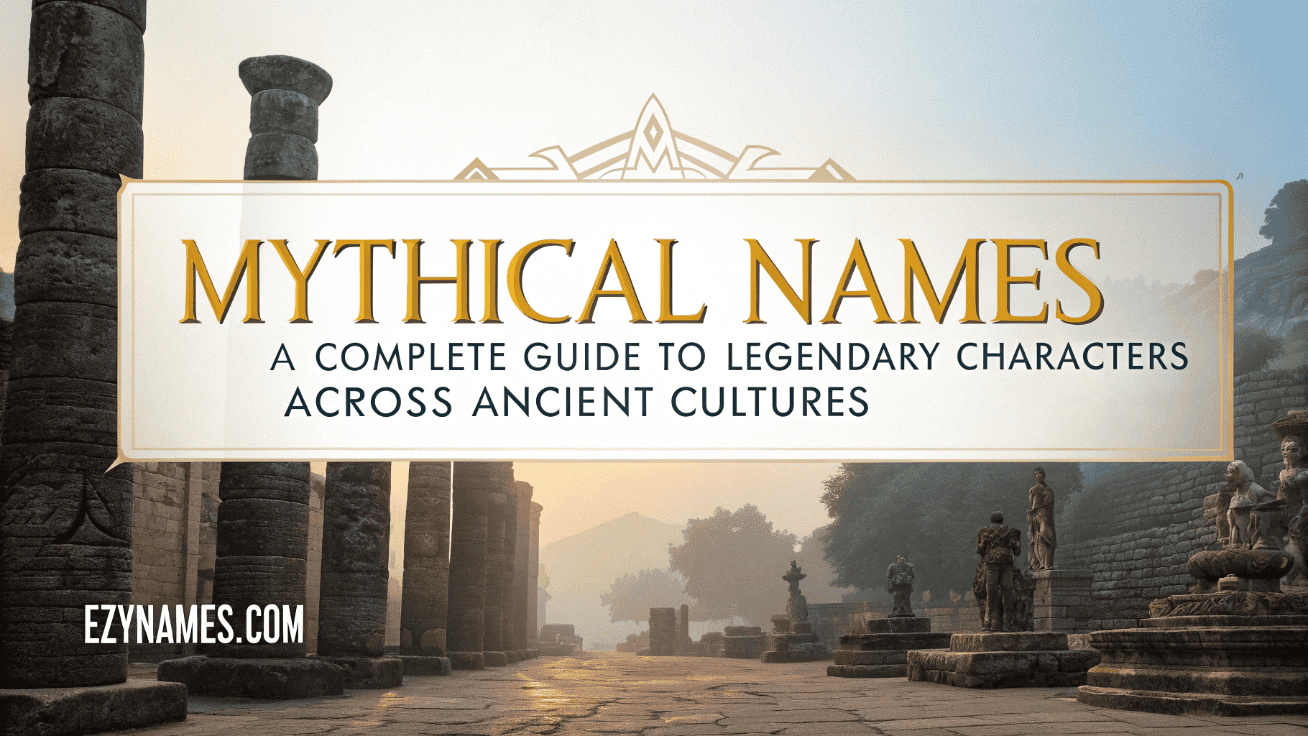
Mythical Names: A Complete Guide to Legendary Characters Across Ancient Cultures
Mythical names come from ancient stories, legends, and folklore that have been passed down through generations across different cultures, similar to other timeless traditions explored in ancient names. These names carry deep meanings and connections to gods, goddesses, heroes, and magical creatures from Greek, Norse, Roman, Celtic, and many other traditions.
Parents looking for unique baby names and writers searching for character names often turn to mythology for inspiration, much like they do when exploring fantasy names. Names like Athena, Perseus, Freya, and Apollo connect modern life to timeless stories while standing out from common names.
Each mythical name tells its own story and carries traits from the legendary figures who first bore them. This guide explores fantasy names, traditional boy and girl options, surnames, old classics, funny choices, and modern takes on mythical names.
Readers will find hundreds of options from different cultures plus practical tips for choosing the right mythical name. Whether someone needs a name for a newborn, a fantasy novel character, or a gaming avatar, mythology offers endless possibilities similar to those found in mythical character names.
Fantasy Mythical Names:
- Thalindra
- Zephyros
- Avaloria
- Nyxander
- Celestian
- Drakonith
- Meridwen
- Shadowlyn
- Emberfell
- Mystralune
- Thornwick
- Silvarian
- Ravencrest
- Phoenixia
- Stormweaver
- Moonwhisper
- Crystaline
- Nightshade
- Valorian
- Frostwyn
Don’t Miss Amazon’s Today’s Deals
Grab the hottest discounts before they’re gone! Explore daily deals, limited-time offers, and exclusive savings on your favorite products — updated every single day.
As an Amazon Associate, I earn from qualifying purchases.
Fantasy Mythical Names
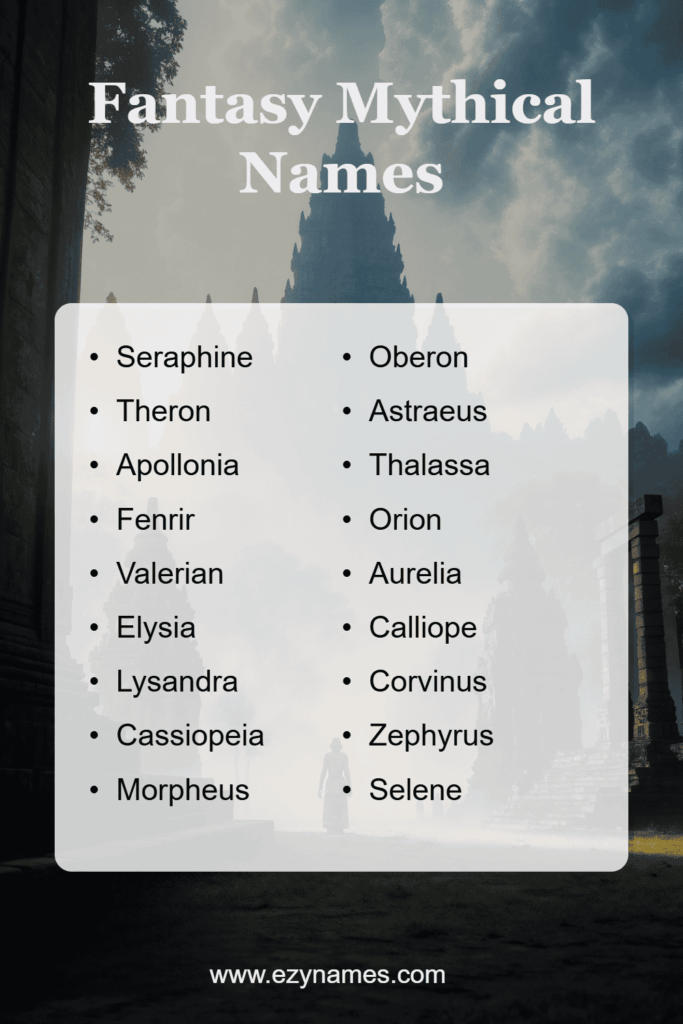
Fantasy mythical names draw from ancient legends and imaginative worlds. These names blend the power of old mythology with creative storytelling and are often inspired by epic traditions seen in legendary names.
They work well for characters in games, stories, or creative projects. Many fantasy names come from god names and goddess names across different cultures, much like collections of god and goddess names.
Writers and gamers often use these mythological names to add depth to their characters. The names carry meaning and history that make characters feel more real.
Popular Fantasy Mythical Names:
- Astraeus – Greek god of stars and planets
- Calliope – Greek muse of epic poetry
- Fenrir – Norse mythological wolf
- Morpheus – Greek god of dreams
- Thalassa – Greek goddess of the sea
- Oberon – Legendary fairy king
- Seraphine – Inspired by celestial beings
- Valerian – Derived from strength and valor
- Aurelia – Connected to golden light
- Theron – Meaning hunter in Greek
- Elysia – From Elysian fields
- Corvinus – Associated with ravens
- Lysandra – Greek for liberator
- Zephyrus – Greek god of the west wind
- Selene – Greek goddess of the moon
- Orion – Legendary hunter from Greek myths
- Cassiopeia – Ethiopian queen from mythology
- Apollonia – Feminine form of Apollo
These mythology names combine strength with elegance. They give characters a sense of purpose and background.
Each name carries its own story from ancient tales or creative fantasy worlds.
Mythical Names Girl Name
Mythical girl names draw from ancient stories and legends across different cultures. These names often belonged to goddesses, heroines, and powerful figures from mythology, similar to elegant options found in curated girl names.
Parents choose them because they carry rich histories and meaningful stories. Greek and Roman mythology provides many popular options.
Athena was the Greek goddess of wisdom and warfare. Luna served as the Roman goddess of the moon.
Penelope was known for her loyalty and cleverness in Greek tales. Aurora represented the dawn in Roman mythology.
Norse and Celtic traditions offer strong choices too. Freya was the Norse goddess of love and beauty.
Maeve came from Irish mythology as a powerful warrior queen. Hindu mythology contributes beautiful names as well.
Aditi was the mother of gods and represented infinity.
Here are mythical girl names from various cultures:
- Athena – Greek goddess of wisdom
- Aurora – Roman goddess of dawn
- Cassandra – Greek prophet princess
- Daphne – Greek nymph transformed into a laurel tree
- Freya – Norse goddess of love
- Guinevere – Celtic queen from Arthurian legend
- Helena – Greek beauty from Troy’s story
- Isolde – Celtic princess from tragic romance
- Lakshmi – Hindu goddess of wealth
- Minerva – Roman goddess of wisdom
- Morgana – Celtic enchantress
- Persephone – Greek queen of the underworld
- Rhiannon – Celtic goddess associated with horses
- Selene – Greek moon goddess
- Thalassa – Greek spirit of the sea
- Valencia – Spanish meaning strength
Each name connects a child to ancient stories and timeless qualities.
Mythical Names Boy Names
Mythical boy names draw from ancient legends, gods, and heroes across different cultures. These names carry stories of strength, wisdom, and adventure that have lasted for thousands of years, similar to bold naming styles seen in boy names.
Apollo comes from Greek mythology as the god of music, poetry, and the sun. Odin represents the powerful Norse god known for his wisdom and leadership.
Atlas refers to the Titan who held up the sky in Greek tales. Orion names the legendary hunter who became a constellation in the night sky.
Arthur connects to King Arthur and the Knights of the Round Table from British legends. Tristan appears in Celtic mythology as a brave knight and tragic hero.
Dylan comes from Welsh mythology meaning “son of the sea.” Finn refers to the Irish hero Finn MacCool, known for his bravery and wisdom.
Parents who choose mythical names often want something with meaning and history. These names work well in modern times while keeping their ancient roots.
Additional mythical boy names include:
- Perseus – Greek hero who defeated Medusa
- Achilles – Greatest warrior of the Trojan War
- Jasper – One of the three wise men
- Phoenix – Mythical bird that rises from ashes
- Evander – Roman hero and founder of cities
- Leander – Greek figure who swam across the sea for love
- Theseus – Athenian hero who defeated the Minotaur
- Magnus – Latin for “great,” used by Norse kings
- Caspian – Named after the legendary sea
- Griffin – Mythical creature with lion and eagle parts
- Osiris – Egyptian god of the afterlife
- Zephyr – Greek god of the west wind
Explore Everything & Shop by Interest
From fashion and tech to books and home essentials — Amazon has it all in one place. Start your shopping journey today and discover something new every time you visit!
As an Amazon Associate, I earn from qualifying purchases.
Last Name Mythical Names
Mythical last names draw inspiration from ancient legends, magical creatures, and supernatural beings across different cultures. These surnames carry a sense of mystery and enchantment and resemble creative styles found in fantasy last names.
Many mythical surnames connect to powerful deities and mythological figures. Morrigan comes from Irish mythology and represents a goddess of fate and war.
Eldritch means strange or otherworldly in old English. Ravenshadow combines nature and darkness to evoke mystical energies.
Nature-based mythical names often reference magical plants and elements. Nightshade links to poisonous plants used in ancient potions and witchcraft.
Stormrider suggests control over elemental forces and weather magic.
Here are notable mythical last names with legendary connections:
- Silvermoon – Associated with lunar magic and celestial power
- Dragonhart – Connects to dragon legends and fierce courage
- Phoenixfire – References rebirth and transformation
- Thornwood – Evokes enchanted forests and natural magic
- Starweaver – Suggests cosmic magic and destiny control
- Shadowmere – Implies connection to dark mystical realms
- Winterfell – Links to ice magic and northern mythology
- Moonshadow – Combines lunar influence with mystery
- Blackthorn – References protective magical barriers
- Frostborne – Suggests ice elemental heritage
- Ravenwood – Connects to wisdom and magical forests
- Serpentine – Links to snake symbolism in mythology
- Ashenblade – Evokes fire magic and warrior legends
- Crystalheart – Suggests purity and magical clarity
- Bloodmoon – References rare celestial events and power
These surnames carry the weight of ancient tales and magical traditions.
Old Mythical Names
Old mythical names carry stories from ancient civilizations that shaped human culture. These names belonged to gods, heroes, and legendary figures who appeared in tales passed down through generations, much like classic inspirations found in old names.
Many parents and writers choose these names for their deep historical roots. The names connect to powerful stories and meaningful themes that still matter today.
Ancient Names from Different Cultures:
- Achilles – Greek warrior hero known for his strength and courage
- Artemis – Greek goddess of the hunt and wilderness
- Persephone – Greek goddess of spring and the underworld
- Hector – Trojan prince and defender of his homeland
- Orpheus – Greek musician with legendary musical abilities
- Penelope – Faithful wife in Greek mythology
- Theseus – Greek hero who defeated the Minotaur
- Calliope – Greek muse of epic poetry
- Odysseus – Greek king known for his long journey home
- Cassandra – Trojan princess with the gift of prophecy
- Perseus – Greek hero who defeated Medusa
- Antigone – Tragic figure in Greek mythology
- Telemachus – Son of Odysseus in Greek legends
- Atalanta – Greek huntress known for her speed
- Prometheus – Titan who gave fire to humans
- Andromeda – Princess saved by Perseus
- Icarus – Young man who flew too close to the sun
These names work well for babies, characters, or creative projects.
Each name holds a complete story from ancient times that adds depth and meaning.
Funny Mythical Names
Mythical names don’t always have to sound serious and grand. Some legendary figures from various cultures have names that make people smile, similar to playful styles seen in funny names.
These names often sound amusing because of how they’re pronounced in English or because they include unexpected combinations of sounds. Many come from real mythology but strike modern ears as humorous.
Names That Make You Smile:
- Anansi – The trickster spider from West African and Caribbean folklore
- Bungisngis – A one-eyed giant from Philippine mythology who laughs constantly
- Chicken-Itza – A playful twist on mythical naming conventions
- Dingbat – Inspired by silly mythical creatures
- Fiddlesticks – A whimsical name for magical tricksters
- Googly-Eyes – Perfect for strange mythical watchers
- Hoodwink – A name for clever mythical deceivers
- Jigglewump – Sounds like a bouncing magical creature
- Kerfuffle – Good for chaos-causing myth figures
- Lollygag – For lazy mythical beings
- Mumbo-Jumbo – Works for mysterious magical entities
- Noodlehead – A silly name for foolish mythical characters
- Pizzazz – For flashy legendary performers
- Rumpelstiltskin – The actual fairy tale character with an awkward name
- Snickerdoodle – Sweet-sounding for friendly mythical creatures
- Ticklebottom – A genuinely amusing mythical name
- Whimsywick – For playful magical beings
- Zigzagger – Perfect for unpredictable mythical tricksters
Best Grocery Deals Today
Find amazing daily grocery offers on fresh produce, organic selections, and essential household products at unbeatable prices, helping you save more on every shopping trip.
As an Amazon Associate, I earn from qualifying purchases.
These names work well for stories, games, or creative projects where humor adds to the mythical atmosphere.
Modern Mythical Names
Modern mythical names blend ancient legends with contemporary style. These names work well in everyday life while keeping their magical roots, much like evolving trends found in modern fantasy names.
Parents today choose mythical names that sound fresh and accessible. Names like Athena, Phoenix, and Luna have become popular because they feel both modern and meaningful.
They carry powerful stories without seeming outdated. Many modern mythical names come from different cultural traditions.
Freya from Norse mythology and Atlas from Greek legends have gained widespread appeal. These names connect children to rich histories while fitting smoothly into current naming trends.
The following names balance mythical origins with modern usability:
| Name | Origin | Notable Feature |
|---|---|---|
| Athena | Greek | Goddess of wisdom |
| Phoenix | Greek | Symbolizes rebirth |
| Orion | Greek | Hunter constellation |
| Freya | Norse | Goddess of love |
| Atlas | Greek | Titan of strength |
| Selene | Greek | Moon goddess |
| Griffin | Greek | Mythical creature |
| Artemis | Greek | Goddess of the hunt |
| Callisto | Greek | Nymph and constellation |
| Evander | Greek | Hero and founder |
| Thalia | Greek | Muse of comedy |
| Castor | Greek | Twin demigod |
| Daphne | Greek | Nature nymph |
| Perseus | Greek | Legendary hero |
| Ariadne | Greek | Princess and helper |
Tips On Choosing The Best Mythical Names
Picking a mythical name requires careful thought. The name should fit the person or character while honoring the story behind it.
Start by researching the meaning. Every mythical name carries a story from ancient cultures. A name like Persephone connects to themes of spring and rebirth, while Thor represents strength and thunder.
Understanding these meanings helps match the name to the right personality. Consider how easy the name is to say and spell.
Some mythical names work well in modern settings, but others might be hard for people to pronounce. Names like Apollo or Diana are simple and familiar.
More complex options like Chrysaor or Ereshkigal might cause confusion. Think about cultural respect.
Mythical names come from real cultures and religions. Research whether a name holds sacred meaning to living communities.
Some names are best avoided out of respect. The name should age well.
A name that sounds cute for a baby might not fit an adult. Test it by imagining the name in different life stages.
Here are strong mythical name options to consider:
- Athena – Goddess of wisdom and war
- Perseus – Greek hero who defeated Medusa
- Freya – Norse goddess of love and beauty
- Orion – Legendary hunter placed among the stars
- Cassandra – Trojan princess with the gift of prophecy
- Phoenix – Mythical bird that rises from ashes
- Artemis – Goddess of the hunt and moon
- Magnus – Norse name meaning great strength
- Selene – Greek goddess of the moon
- Theron – Name meaning hunter
- Callisto – Nymph transformed into a bear
- Evander – Hero who founded a city in Italy
- Isadora – Gift of the goddess Isis
- Leander – Lover who swam the sea nightly
- Pandora – First woman in Greek myths
Match the name to the setting where it will be used. Fantasy stories allow more unusual choices than real-world situations, similar to guidance shared in character naming tips.
Frequently Asked Questions
Mythology provides a rich source of names for characters, creatures, and settings in fantasy writing. These names often carry deep meanings and connections to ancient stories that can add depth to creative works.
What are some powerful male names drawn from mythology?
Thor stands as one of the most recognizable names from Norse mythology, representing the god of thunder and strength. Ares, the Greek god of war, offers a short but impactful option for warrior characters.
Atlas carries the weight of his story as the Titan who held up the sky. Orion comes from Greek mythology as a legendary hunter placed among the stars.
Perseus defeated Medusa and saved Andromeda in his heroic tales. Achilles remains famous for his role in the Trojan War and his near-invulnerability.
Hector served as Troy’s greatest defender and showed courage until his final battle. Apollo represents music, prophecy, and the sun in Greek tradition.
Osiris ruled as the Egyptian god of the afterlife and rebirth. Lancelot brings Arthurian legend into the mix as the greatest knight of the Round Table.
Theseus defeated the Minotaur and became a founding hero of Athens.
Hercules performed twelve impossible labors and achieved immortality through his strength.
Odin leads the Norse gods with wisdom and magic from his throne in Asgard.
Can you suggest mystical names for female characters inspired by legends?
Athena embodies wisdom and strategic warfare in Greek mythology. Freya rules over love and battle in Norse tales while possessing powerful magic.
Artemis hunts through forests as the Greek goddess of the moon and wild animals. Persephone moves between worlds as queen of the underworld and goddess of spring.
Morgana appears in Arthurian legend as a powerful enchantress with complex motivations. Selene drives her chariot across the night sky as the Greek personification of the moon.
Isolde captures hearts in Celtic romance as a princess bound by a love potion. Rhiannon rides through Welsh mythology as a goddess connected to horses and birds.
Cassandra received the gift of prophecy but suffered the curse of never being believed. Calliope leads the nine Muses as the inspiration for epic poetry.
Andromeda survived being chained to a rock and became a constellation.
Ariadne helped Theseus escape the labyrinth with her clever thread.
Nephthys protected the dead in Egyptian mythology alongside her sister Isis.
Guinevere reigned as King Arthur’s queen in Camelot’s golden age.
How do you create a mythical name for fantasy creatures?
Combining elements from existing languages creates authentic-sounding mythical names. Greek and Latin roots work well because they already appear in many legendary creature names.
Words that describe the creature’s appearance or abilities often form the base of effective names. Adding prefixes like “dra” or “vor” gives names a more ancient sound.
Suffixes such as “oth,” “ax,” or “iel” help names feel otherworldly. Harsh consonants like k, x, and z suggest dangerous or powerful creatures.
Softer sounds with l, n, and vowels work better for gentler or mystical beings.
Repeating certain letter combinations throughout a fantasy world creates linguistic consistency.
Names should be pronounceable but still feel foreign to modern ears.
What are some enchanting names for dragons found in folklore?
Smaug terrorized the Lonely Mountain in Tolkien’s writings as a cunning and greedy wyrm. Fafnir transformed from a dwarf into a dragon in Norse mythology to guard cursed gold.
Nidhogg gnaws at the roots of Yggdrasil, the world tree in Norse tales. Tiamat represents chaos and creation in Babylonian mythology as a primordial dragon goddess.
Ladon guarded the golden apples in the Garden of the Hesperides with his hundred heads. Jormungandr circles the world as the Midgard Serpent in Norse legend.
Shenlong brings rain and controls weather in Chinese mythology as a spiritual dragon. Draco watches over the northern sky as a constellation from Greek stories.
Hydra regrew two heads for every one Hercules cut off in his labors. Vritra blocked the waters in Hindu mythology until Indra defeated this drought-bringing serpent.
Apophis threatens to swallow the sun each night in Egyptian tales of cosmic battle.
Which ancient Greek names carry strong or cool connotations?
Leonidas led three hundred Spartans at Thermopylae and means “lion-like” in Greek. Maximus translates to “the greatest” and carried weight in ancient Rome.
Phoenix rises from ashes as both a mythical bird and a Greek hero at Troy.
Zephyr blows as the west wind, gentle and favorable to sailors.
Evander founded a city in Italy before Rome and brought Greek culture west.
Theron means “hunter” and belonged to several ancient Greek rulers.
Damon proved the power of friendship through his willingness to die for his
friend. Titan references the powerful elder gods who ruled before the Olympians.
Draven combines dragon imagery with a raven’s dark mystery. Caspian takes its name from an ancient sea and carries an adventurous feeling.
Ambrose means “immortal” in Greek and suggests eternal strength. Orpheus charmed all living things with his legendary musical abilities.
Could you list some mythical-inspired names suitable for places in a fantasy setting?
Avalon serves as the legendary island where King Arthur’s sword was forged and his wounds were healed.
Olympus towers as the mountain home of the Greek gods above the clouds.
Asgard stands as the realm of the Norse gods connected by the rainbow bridge.
Atlantis sank beneath the waves as an advanced civilization in Plato’s writings.
Elysium offers eternal peace to heroes and the virtuous in Greek afterlife beliefs.
Camelot represents the golden age of King Arthur’s kingdom and the Round Table.
Themiscyra housed the warrior women known as Amazons on the Black Sea coast.
Hyperborea existed as a paradise beyond the north wind in Greek geographical myths.
Valhalla welcomes fallen warriors to feast and fight in Norse tradition.
Arcadia symbolizes unspoiled wilderness and pastoral harmony in Greek regional mythology.
Shambhala hides as a mystical kingdom in Tibetan Buddhist and Hindu traditions.
Midgard forms the realm of humans connected to other worlds by Yggdrasil.
Ithaca served as Odysseus’s island kingdom where he returned after twenty years of wandering.
Lyonesse disappeared beneath the waves off the coast of Cornwall.