Faun Names: A Complete Guide to Mythological Character Naming
Fauns are mythical creatures that blend human and goat features, creating characters full of charm and mystery. These forest-dwelling beings appear in stories, games, and creative projects where their names help bring their personalities to life.
Whether writing fantasy fiction or creating a role-playing game character, the right name can capture a faun’s connection to nature and magic.
Finding the perfect faun name means considering elements like nature, mythology, and the character’s unique traits. The best names often draw from forest imagery, musical sounds, and ancient roots that reflect these creatures’ earthy essence.
Some names work better for playful personalities while others suit more noble or mysterious characters.
This guide explores different types of faun names across multiple categories. Readers will discover options for male and female characters, traditional and modern choices, and even humorous alternatives.
The article also includes practical tips for creating original names that fit any fantasy setting.
Fernwick, Thornelios, Mosswhisper, Willowhart, Oakendrift, Piperleaf, Shadowbrook, Maplehorn, Asterbranch, Cedarwind, Hawthorne, Nightingale, Riverstone, Bramblethorn, Forestmere
Fantasy Faun Names
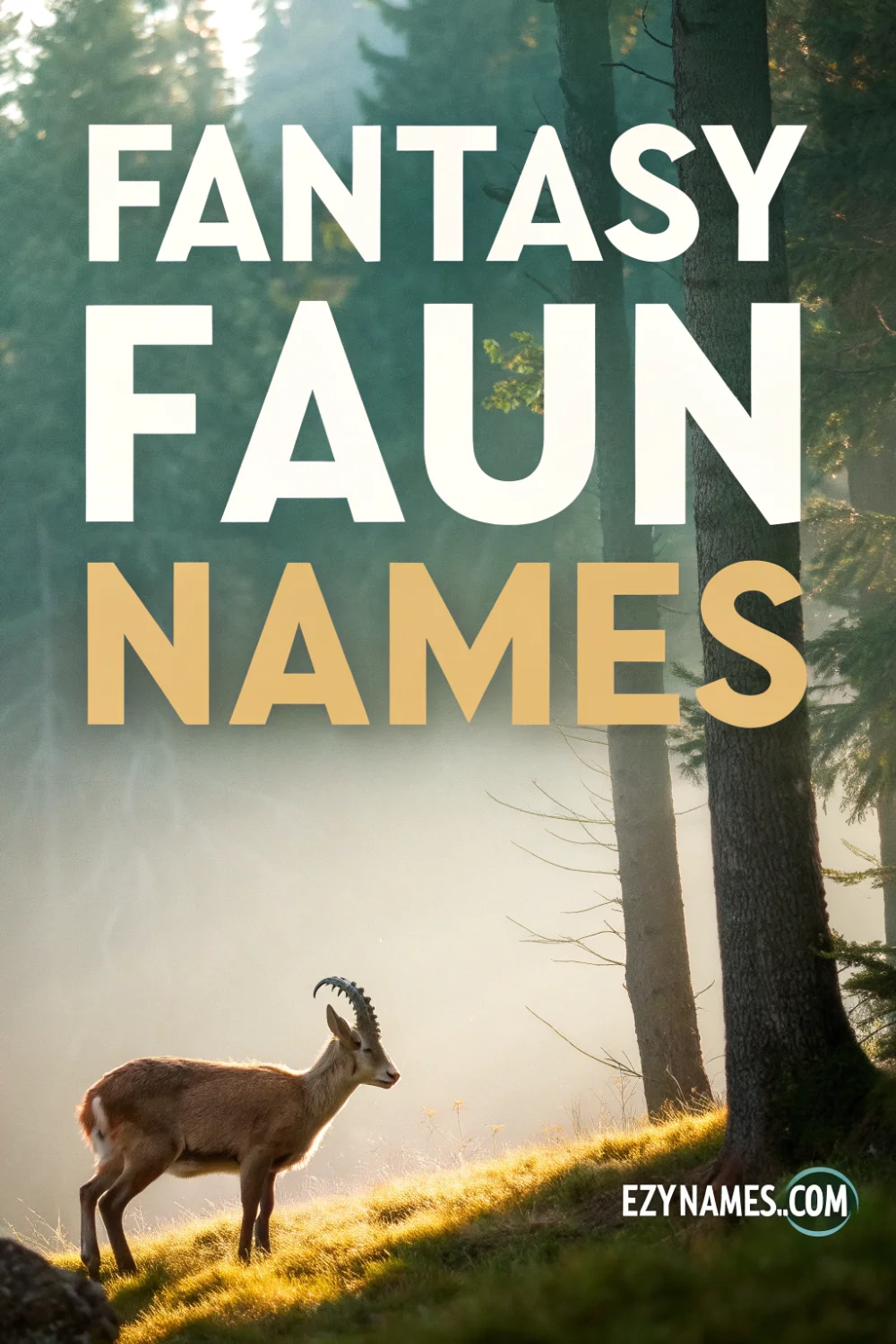
Fantasy faun names blend natural elements with mythical sounds to create memorable character identities. These names often draw from forest imagery, musical references, and ancient language roots.
Writers and game players use them to bring woodland creatures to life in their stories and campaigns. Fantasy faun names work best when they sound earthy yet magical.
They typically include soft consonants and flowing vowels that mirror the gentle nature of these forest dwellers.
Popular Fantasy Faun Names:
- Thornwick – A sturdy name suggesting forest strength
- Moonwhisper – Evokes night magic and quiet wisdom
- Willowbranch – Connects to graceful tree imagery
- Acornheart – Represents woodland courage
- Fernshade – Brings to mind cool forest floors
- Pipemeadow – Reflects musical and pastoral themes
- Mosswood – Suggests ancient forest places
- Dewspring – Captures fresh morning nature
- Ashenbark – Implies aged tree knowledge
- Cloverfoot – Light and playful character
- Briarwind – Wild and untamed spirit
- Hazelgrove – Peaceful woodland setting
- Mistwalker – Mysterious forest wanderer
- Oakensong – Strong yet melodic presence
- Petalbrook – Gentle water and flower mix
- Rustleaf – Autumn forest sounds
- Silverhorn – Noble and distinct feature
- Thistledown – Soft yet resilient nature
Don’t Miss Amazon’s Today’s Deals
Grab the hottest discounts before they’re gone! Explore daily deals, limited-time offers, and exclusive savings on your favorite products — updated every single day.
As an Amazon Associate, I earn from qualifying purchases.
Each name carries specific imagery that helps define a character’s personality and role.
Game masters and authors can match names to their faun’s traits, whether mischievous, wise, or brave.
Faun Girl Names
Female faun names often draw from nature, mythology, and the forest realm these creatures call home. These names capture the grace and wild spirit of fauns while connecting to their woodland heritage.
Many female faun names reference plants, trees, and natural elements. Names like Willow and Elowen bring to mind the forests where fauns dwell.
Others connect to Greek and Roman mythology, reflecting the ancient roots of faun legends.
Popular Female Faun Names:
- Sylvana – derived from forest and woodland
- Lysandra – means liberator or freer
- Fawnia – connects directly to faun nature
- Melodia – relates to music and song
- Celena – associated with the moon
- Dianthe – means divine flower
- Floralia – references flowers and blooms
- Nerida – connected to water nymphs
- Phaelia – brings brightness and light
- Raelin – evokes wise counsel
- Selene – lunar goddess name
- Thalassa – means the sea
- Virelai – a form of medieval poetry
- Xylia – relates to forest wood
- Ysolde – means ice ruler
- Orlena – golden one
- Quelista – peaceful and calm
- Ivyra – connects to climbing vines
The name Syrinx holds special meaning in faun mythology. Syrinx was a nymph who transformed into reeds to escape pursuit, and those reeds became the first pan pipes.
This name links directly to the musical instruments fauns traditionally carry. Each name carries its own character and fits different personality types for faun characters in stories or games.
Faun Boy Names
Male faun names often draw from nature, mythology, and the wild spirit of the forest. These names reflect the playful yet mysterious nature of faun characters in fantasy settings.
Many male faun names have roots in Greek and Roman mythology. Marsyas, for example, was a famous satyr in Greek myths known for his musical talent.
This type of name works well for fauns who are artists or musicians.
Popular Male Faun Names:
- Bramwell – inspired by thorny forest plants
- Cypress – named after the tall, elegant tree
- Thornwick – suggests a connection to wild thickets
- Silvanus – derived from Roman forest gods
- Rowan – a tree known for its protective qualities
- Oakley – reflects strength and endurance
- Fenwick – combines fen (marshland) with a classic suffix
- Ashford – references ash trees and forest clearings
- Hawthorne – named after the thorny flowering tree
- Birchwood – evokes pale bark and woodland settings
- Larkspur – a delicate yet wild flower
- Alderon – suggests ancient woodland wisdom
- Willowby – gentle like willow branches
- Cedric – means kindly and loved
- Briarstone – combines wild growth with earth
These names work for different types of faun characters. Some sound gentle and musical while others feel more rugged.
Pick names that match your faun’s personality and role in your story or game.
Last Name Faun Names
Last names add depth and history to faun characters. They often reflect the natural world that fauns call home or hint at family lineages tied to ancient forests and meadows.
Nature-inspired last names work well for fauns. These surnames connect characters to their woodland origins and the magic that flows through their world.
Many fantasy writers and game players choose names that sound earthy and mystical.
Nature-Based Last Names:
- Thornwick
- Mossgrove
- Willowshade
- Fernbrook
- Oakenheart
- Briarwood
- Meadowspring
- Elmsworth
- Ashenvale
- Rootwalker
Explore Everything & Shop by Interest
From fashion and tech to books and home essentials — Amazon has it all in one place. Start your shopping journey today and discover something new every time you visit!
As an Amazon Associate, I earn from qualifying purchases.
Mystical Last Names:
- Starwhisper
- Moonbranch
- Duskweaver
- Songbloom
- Windchaser
Last names can also reference a faun’s talents or traits. A faun skilled in music might carry the name Pipewind, while one known for dancing could be called Hooflight.
Famous fauns from mythology, like Pan from Greek legends, typically went by single names. Modern fantasy stories have expanded on this tradition by adding surnames that feel both ancient and connected to nature.
These last names help create fuller identities for faun characters in games and stories. The best last names sound natural when spoken aloud.
They should roll off the tongue easily and match the tone of the story or game world. Writers can mix different nature elements together to create unique combinations that feel original yet familiar.
Old Faun Names
Ancient mythology provides the foundation for traditional faun names. These names often connect to classical sources and reflect the rustic nature of these woodland beings.
The Roman god Faunus stands as the original namesake for these creatures. Pan, the Greek equivalent, represents another foundational name tied to faun mythology.
Silenus, the elder companion of Dionysus, also belongs to this ancient tradition of forest spirits. Old faun names typically draw from Latin and Greek roots.
They carry sounds that feel weathered by time and connected to ancient forests.
Traditional Old Faun Names:
- Silvanus – derived from Roman woodland deities
- Lupercus – connected to ancient Roman festivals
- Aegipan – a goat-footed companion of Pan
- Marsyas – a satyr from Greek mythology
- Ampelos – friend of Dionysus in ancient tales
- Pholus – a wise centaur-like figure
- Krotos – credited with inventing applause
- Agreus – associated with hunting and wilderness
- Nomios – tied to pastures and shepherding
- Lenaeus – connected to wine and festivities
- Phaunos – an alternate spelling of Faunus
- Aristaeus – keeper of rural arts
- Palaemon – a sea deity with rustic origins
- Lycaeus – linked to mountain wilderness
- Terminus – guardian of boundaries and wild places
- Evander – a mythical Arcadian hero
- Comus – god of festivity and revelry
These names work well for elder fauns or characters with ancient backgrounds. They provide authenticity to fantasy settings that draw from classical mythology.
Funny Faun Names
Funny faun names add a playful touch to fantasy characters and stories. These names work well for lighthearted tales or comedy-focused games where the character brings humor to the scene.
The best funny faun names often mix woodland themes with silly sounds or unexpected word combinations. They might reference their connection to nature in amusing ways or play on common phrases.
Humorous Faun Name Ideas:
- Hoofington – A proper-sounding name with a silly twist
- Barkley Stumbles – Perfect for a clumsy forest dweller
- Twiggsworth – Sounds dignified but references small branches
- Bramblebutt – An obvious joke about their forest habitat
- Professor Prance – Combines intelligence with bouncy movement
- Fernando Fuzzleaf – Alliterative and whimsical
- Goatimer Twinkletoes – Highlights their half-goat nature
- Mossley McNutter – Irish-inspired with nature elements
- Captain Caperton – Military title meets goat reference
- Willowby Wobbles – Suggests an unsteady gait
- Thumperton – References the sound of hooves
- Nettlebottom – Another cheeky nature-based joke
- Thistle McSprout – Combines prickly plants with growth
- Galloping Guffaw – About movement and laughter
- Prancey Pantsworth – Double dose of silliness
Best Grocery Deals Today
Find amazing daily grocery offers on fresh produce, organic selections, and essential household products at unbeatable prices, helping you save more on every shopping trip.
As an Amazon Associate, I earn from qualifying purchases.
These names strike a balance between fantasy elements and comedic appeal. They give faun characters personality before they even speak or act.
Modern Faun Names
Modern faun names blend traditional fantasy elements with contemporary sounds. These names work well for characters in stories, games, and role-playing adventures set in present-day or futuristic settings.
Many modern faun names draw from nature but add fresh twists. They might reference urban environments, technology, or current naming trends.
This approach creates characters that feel both magical and relatable to modern audiences.
Contemporary Faun Name Ideas:
- Ashwood – Combines natural imagery with a modern surname feel
- Briarstone – Merges wild thorns with solid earth elements
- Cypress – A sleek, nature-based name with modern appeal
- Fennwick – Blends woodland sounds with contemporary style
- Grayson – A popular modern name adapted for faun characters
- Hawthorne – Classic plant name that sounds current
- Jasper – A gemstone name that bridges old and new
- Marlowe – Literary and sophisticated with nature roots
- Oakley – Tree-inspired with a trendy edge
- Rowan – Gender-neutral and increasingly popular
- Silvanus – Ancient name with a modern ring
- Thornley – Nature-based with an urban twist
- Wilder – Bold and adventurous sounding
- Wrenley – Bird-inspired with contemporary styling
- Zephyr – Wind element with modern brevity
These names maintain the earthy, magical quality fauns require while fitting modern settings. They avoid overly complex spellings and work across different types of fantasy stories.
Character creators can use these names as-is or modify them to match specific personality traits or backgrounds.
Tips On Choosing The Best Faun Names
Picking the right faun name requires thinking about the character’s personality and background. A playful faun needs a different name than a wise or serious one.
Consider connecting the name to nature. Fauns live in forests and meadows, so names that reference plants, animals, or natural features work well.
Think about seasons, weather, or forest elements when brainstorming. Names with softer sounds like “l,” “n,” and “r” often fit fauns better than harsh consonants.
Try saying the name out loud to see if it flows naturally. Draw inspiration from mythology and ancient languages.
Greek, Latin, and Roman roots give names an authentic mythical feel. Mix and match syllables from different sources to create something unique.
Look at these key factors:
- The faun’s role in your story or game
- Their personality traits and behavior
- The setting and time period
- How the name sounds when spoken aloud
Example Names:
- Silvanus
- Thornwick
- Meadowlark
- Briarwood
- Fernwhisper
- Cyprian
- Willowshade
- Mossbrook
- Hawthorne
- Petalwind
- Oakenhart
- Riverstone
- Bramblefawn
- Ashendell
- Duskmeadow
- Cedarion
- Starlingwood
- Cloverfield
- Pinegrove
- Maplehorn
Arts, Crafts & Sewing Supplies Collection
Explore a wide range of crafting materials, fabrics, tools, and accessories designed to inspire creativity and help you bring your artistic ideas to life.
As an Amazon Associate, I earn from qualifying purchases.
Keep the name simple enough to remember but interesting enough to stand out. Avoid names that are too long or complicated to pronounce.
Test the name with others to make sure it sounds right for your character.
How do I choose a suitable name for a male faun character?
Male faun names work best when they connect to nature elements or woodland sounds. Names like Thornwick, Oakdancer, or Fernbrook blend natural imagery with masculine energy.
The character’s personality should guide the selection. A gentle, musical faun might suit names like Silvanus or Melodion, while a wilder spirit fits names such as Brambleheart or Stormhoof.
Consider the setting and time period of the story. Ancient mythology-inspired names like Faunus or Pan carry weight and history.
Modern fantasy settings allow for more creative combinations like Mosswhisper or Pinegrove.
What are some popular names for female fauns in mythology and fantasy literature?
Female faun names often emphasize grace and natural beauty. Classic choices include Sylvana, Fawnia, Lysandra, Melodia, and Floralia.
Nature-based names dominate this category. Willow, Elowen, and Ivyra draw directly from plants and trees.
Other options like Selene and Celena reference celestial elements tied to woodland magic. Literary tradition favors names with soft sounds and flowing syllables.
Thalassa, Phaelia, and Virelai create an enchanting feel. Names like Aria and Dianthe blend musicality with floral imagery.
Can you suggest unique surnames commonly used for fauns?
Faun surnames typically reference their forest homes or physical traits. Woodland-based surnames include Deepwood, Greenleaf, Shadowgrove, and Briarthorn.
Landscape features provide another naming source. Options like Streamrunner, Hillcrest, Meadowbrook, and Stonebrook ground characters in specific territories.
Physical or behavioral traits also work well. Surnames such as Swiftfoot, Goldenhorn, Nightdancer, and Moongazer describe distinguishing characteristics.
Some fauns use surnames that reflect their craft, like Pipemaker or Vineweaver.
Who are some renowned fauns in mythology, and what are their names?
Faunus stands as the most prominent faun in Roman mythology. He served as the god of forests, plains, and fields, protecting shepherds and their flocks.
Pan represents the Greek equivalent, though technically classified as a satyr. His name means “all” in Greek, reflecting his connection to wild nature and rustic music.
Mr. Tumnus appears as the most famous literary faun from C.S. Lewis’s Chronicles of Narnia. His full name, Tumnus, has become synonymous with kind-hearted faun characters in modern fantasy.
What are the differences between faun names and satyr names in classical mythology?
Fauns belong to Roman mythology while satyrs originate from Greek traditions. This geographic distinction influences naming conventions and cultural associations.
Satyrs typically have more Greek-sounding names that reflect their wilder, more chaotic nature. Their names often connect to revelry and untamed behavior.
Faun names carry a softer, more pastoral quality. Roman influence means their names sound more structured and often relate to agricultural and woodland protection rather than pure wilderness.
How can I generate creative and culturally appropriate faun names for my fantasy story?
Start by researching real woodland terminology and natural phenomena. Combine words from plant names, forest features, and animal characteristics to create authentic-sounding names like Ashenbark or Deerspring.
Use Latin or Celtic root words for a mythological feel. Words meaning forest, leaf, horn, or meadow provide strong foundations.
Mix prefixes and suffixes from different nature terms to build unique combinations. Consider the faun’s role in the story and their personality traits.
A healer might have names with gentle sounds like Willowmist or Fernheart. A warrior faun could carry names like Ironhoof or Thunderbranch.
Test names by saying them aloud to ensure they sound natural and fit the character. Avoid overly complicated spellings that distract readers from the story itself.