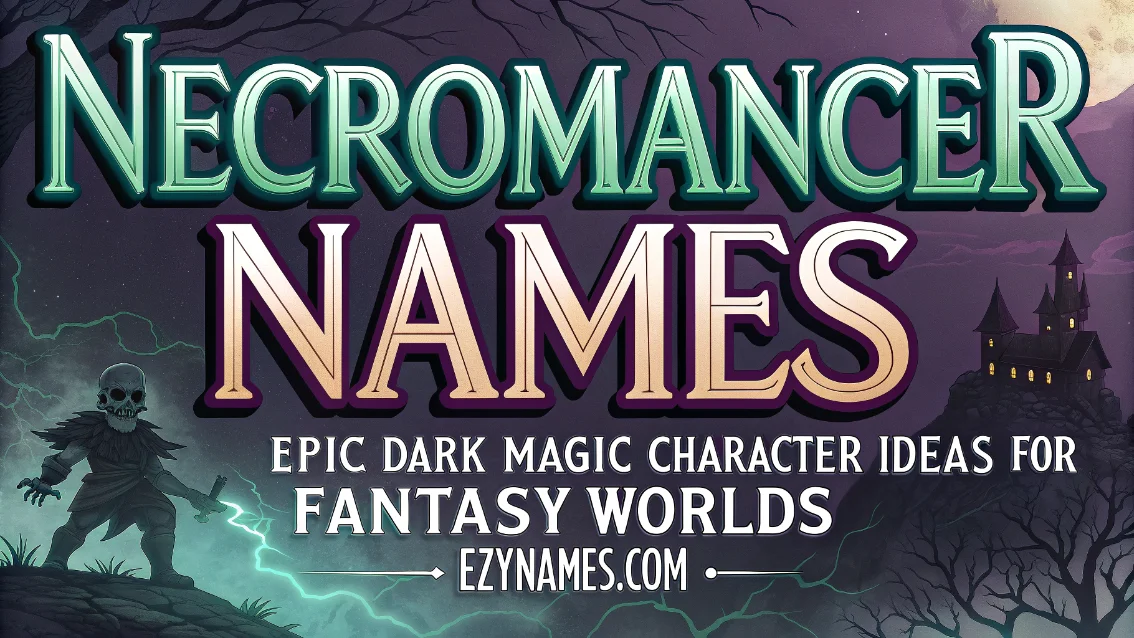
Necromancer Names: Epic Dark Magic Character Ideas for Fantasy Worlds
Necromancers are dark magic users who command the dead and draw power from death itself. These characters appear in games, stories, and fantasy worlds where they serve as villains, antiheroes, or complex protagonists.
A good necromancer name should sound dark and mysterious while hinting at the character’s connection to death and forbidden magic. Finding the right name matters because it sets the tone for the entire character.
A name like Mortheus or Shadowveil immediately tells readers or players what kind of character they’re dealing with. The best necromancer names combine elements of darkness, ancient languages, and death-related imagery to create something memorable and fitting.
This guide covers different types of necromancer names for any purpose. Whether someone needs a name for a fantasy game character, a story villain, or creative inspiration, they’ll find options ranging from serious and ancient to funny and modern.
Valthorien, Necraevus, Mortishan, Shadowmere, Gravethorne, Deathmoor, Voidcaller, Nightbane, Soulrender, Darkmourn, Nethervex, Obsidianth, Cryptmaster, Lichborne, Boneweaver
Fantasy Necromancer Names
Fantasy necromancer names capture the dark essence of those who control death magic and command the undead. These names often draw from ancient languages, mythology, and ominous imagery to create memorable characters.
A strong necromancer name should reflect power and mystery. Names inspired by death deities like Hecate work well for characters who channel forbidden magic.
Other options might reference shadows, bones, or the underworld itself.
Unique Necromancer Names for Fantasy Settings:
- Mortalis Shade
- Ravencroft Darkweaver
- Valdris the Forsaken
- Netherbane Soulkeeper
- Malachar Grimwood
- Vespera Nighthollow
- Corvinus Dreadmourn
- Thanatos Ashwalker
- Morgrath the Pale
- Obsidian Cursebinder
- Lysandra Tombwhisper
- Xareth Bonecaller
- Silvanus Deathshroud
- Nocturna Gravesinger
- Kaldreth Spiritbane
- Mordecai Shadowveil
- Azraeth the Hollow
- Seraphine Darkspire
- Cadaverous Rex
- Malthius Soulrender
Don’t Miss Amazon’s Today’s Deals
Grab the hottest discounts before they’re gone! Explore daily deals, limited-time offers, and exclusive savings on your favorite products — updated every single day.
As an Amazon Associate, I earn from qualifying purchases.
Cool necromancer names often combine harsh consonants with flowing syllables. Evil necromancer names lean into darker themes and threatening sounds.
The best fantasy names balance originality with pronounceability. Characters with these names might summon skeletal armies or commune with spirits.
They operate in gray areas between life and death, wielding magic that others fear.
Necromancer Girl Names
Female necromancer names often draw from dark mythology, celestial bodies, and ancient languages. These names carry weight and mystery, fitting for characters who command death magic.
Classic Dark Names
Names like Lilith and Morgana have roots in legend and folklore. Lilith comes from ancient mythology, while Morgana connects to Arthurian tales of magic and power.
Isolde brings a Gothic feel with its medieval origins.
Celestial and Night-Themed Names
Many necromancer names reference the night and moon. Nyx is the Greek goddess of night, making it a strong choice.
Luna and Selene both mean moon in different languages. These names suggest someone who works in darkness and shadow.
Unique Name Collection
- Morwenna – ancient and mysterious
- Ravena – connected to ravens, birds of death
- Soraya – Persian name meaning star cluster
- Thessaly – region known for witches in Greek tales
- Vespera – evening star
- Nightshade – poisonous plant name
- Morrigan – Celtic goddess of war and death
- Obscura – darkness in Latin
- Tenebris – shadow or darkness
- Seraphine – fallen angel imagery
- Corvina – raven-like
- Necrose – relating to death
- Umbra – shadow or ghost
- Hecate – Greek goddess of witchcraft
- Maleficent – causing harm or evil
Each name carries its own power and meaning. Some connect to mythology while others use Latin or Greek roots.
The best choice depends on the character’s background and the story’s setting.
Necromancer Boy Names
Male necromancer names often draw from dark mythology, ancient languages, and words connected to death and shadows. These names carry weight and power that fits characters who command the undead.
Draven stands out as a popular choice, meaning “hunter” with Gothic undertones. Thanatos comes directly from Greek mythology as the personification of death itself.
Balthazar offers a more mysterious feel, borrowed from ancient Babylonian origins meaning “Baal protects.” Azrael refers to the angel of death in several religious traditions.
Vladimir brings Slavic darkness to mind, often associated with historical figures tied to death and power. Damien carries sinister connections through popular culture while maintaining an accessible sound.
Other strong options include:
- Morticus – derived from Latin words for death
- Corvinus – meaning “raven-like” in Latin
- Malachar – a name suggesting corruption and decay
- Obsidian – named after the dark volcanic glass
- Tenebris – Latin for darkness
- Sepulcher – referencing tombs and burial places
- Nocturne – connected to night and shadows
- Vesperus – meaning evening or twilight
- Zephyrion – a twisted take on wind and spirits
- Gideon – meaning “destroyer” in Hebrew
- Necrose – directly referencing tissue death
- Shadowmere – combining darkness with an ominous sound
- Obelisk – named after ancient memorial stones
Each name works well for gaming characters, story villains, or fantasy worlds where necromancers practice their forbidden arts.
Last Name Necromancer Names
Last names help establish a necromancer’s lineage and connection to dark magic. These surnames often reference death, darkness, or the undead arts passed down through generations.
Many necromancer families choose names that sound ominous or ancient. The right last name adds depth to a character and hints at their family history.
Dark Family Names:
- Gravemoor
- Shadowbane
- Netherveil
- Blackthorn
- Dreadmourn
- Soulweaver
- Ashborne
- Darkwhisper
- Nightshade
- Bonecaller
- Voidwalker
- Cryptkeeper
- Deathshroud
- Tombvale
- Grimsorrow
- Rotwood
- Wraithmore
- Palehart
Explore Everything & Shop by Interest
From fashion and tech to books and home essentials — Amazon has it all in one place. Start your shopping journey today and discover something new every time you visit!
As an Amazon Associate, I earn from qualifying purchases.
These surnames work well for any necromancer character. They can be combined with first names or used alone to create a mysterious identity.
Some last names reference specific aspects of necromancy. Names like Bonecaller and Soulweaver directly describe the dark arts.
Others like Shadowbane or Netherveil sound mysterious without being too obvious. Family names also help players and readers understand a character’s background.
A necromancer named Grimstone comes from a different tradition than one named Shadowveil. The surname sets expectations about the character’s personality and power.
Old Necromancer Names
Old necromancer names carry the weight of ancient traditions and forgotten magic. These names often draw from historical languages and classical mythology.
They sound timeless and mysterious, perfect for characters who have mastered death magic over many years. Many old necromancer names use hard consonants and dark vowel sounds.
This makes them feel powerful and serious. They often reference death, darkness, or the underworld in their structure.
Classic Old Necromancer Names:
- Malachai – A name rooted in ancient texts, suggesting dark wisdom
- Mordecai – Has an old-world feel with mysterious origins
- Azrael – Connected to the angel of death in ancient lore
- Balthazar – An ancient name that sounds both regal and ominous
- Cornelius – A Roman name that works well for elder necromancers
- Thaddeus – Has a scholarly, ancient quality
- Barnabas – Sounds old and carries a Gothic atmosphere
- Lazarus – Directly references rising from death
- Mortimer – Literally means “dead sea” in old languages
- Septimus – A Latin name suggesting age and tradition
- Ambrose – Ancient Greek origin with a dark edge
- Cassius – Roman name that sounds cold and calculating
- Tiberius – Another Roman name with imperial weight
- Gregorian – Has an aged, ceremonial quality
- Valerian – Ancient Roman name with herbal connections
- Erasmus – Greek origin that sounds scholarly and old
These names work well for necromancers who have studied their craft for decades or even centuries.
Funny Necromancer Names
Funny necromancer names blend dark magic themes with clever wordplay and humor. These names take the typically grim practice of raising the dead and add a lighthearted twist that makes characters more memorable and entertaining.
The best funny necromancer names often use puns related to death, bones, or the undead. They can reference pop culture, play with spelling, or combine serious-sounding words with silly ones.
Players and writers use these names in games, stories, and role-playing scenarios to add personality to their characters.
Creative Funny Necromancer Names:
- Bone Jovi – A play on the famous rock band name
- Skeletor Swift – Combines undead imagery with pop culture
- Grave Diggler – A pun on grave digging
- Mort Tickles – Uses “mort” (death) with something playful
- Cryptkeeper Carl – Sounds both spooky and friendly
- Zombert Einstein – Mixes zombie with a genius name
- Necro Polo – A twist on Marco Polo
- Deadgar Allan – References a famous Gothic writer
- Ghouliver Twist – Plays on classic literature
- Manny Bones – Simple and straightforward pun
- Corpse Lundgren – Action star meets the undead
- Ribbert the Skeleton – Adds personality to bone structure
- Professor Deathany – Academic title with dark humor
- Tombothy Jones – Classic name with grave imagery
- Skellington Pete – Friendly bones character
These names work well for fantasy games, creative writing projects, and tabletop role-playing campaigns where players want to balance darkness with entertainment.
Modern Necromancer Names
Modern necromancer names blend contemporary sounds with dark themes. They work well for urban fantasy settings, video games, and stories set in the present day.
These names often use sharp consonants and unusual letter combinations. They sound fresh while still carrying a sense of mystery and power.
Male Modern Necromancer Names:
- Corvinus – Combines Latin roots with a modern edge
- Ashenvale – Merges ash imagery with a place-based surname
- Mordekai – A twisted take on traditional names
- Vexarian – Uses harsh sounds for impact
- Nihilus – References the void and nothingness
- Graves – Simple yet effective surname-style name
- Shadowen – Plays with darkness in a subtle way
- Cryptic – Modern word that fits the theme
Best Grocery Deals Today
Find amazing daily grocery offers on fresh produce, organic selections, and essential household products at unbeatable prices, helping you save more on every shopping trip.
As an Amazon Associate, I earn from qualifying purchases.
Female Modern Necromancer Names:
- Ravenna – Sophisticated with dark undertones
- Morticia – Death-themed but accessible
- Nocturne – Musical term that evokes night
- Vesper – Evening star with gothic appeal
- Darkrose – Combines beauty with shadow
- Netharia – Invented name with otherworldly sound
- Grimsley – Surname-style with clear meaning
Gender-Neutral Options:
- Obsidian – Named after volcanic glass
- Eclipse – Celestial phenomenon with dark connotations
- Phantom – Direct reference to spirits
Modern necromancers can have names that sound like they belong in today’s world while maintaining their connection to death magic.
Tips On Choosing The Best Necromancer Names
A strong necromancer name should match the character’s personality and background. Dark syllables like “mor,” “nex,” or “vex” create an ominous feel that fits the death magic theme.
Consider the setting when picking a name. Fantasy worlds with Latin roots work well with names like Mortheus or Necrovar.
Gothic settings might suit names such as Ravencroft or Shadowmere. Sound matters more than most people think.
Names with harsh consonants (k, x, z) sound more threatening than soft ones. Compare Zalthar to Melody and notice the difference.
A necromancer name generator can help when stuck for ideas. These tools combine dark syllables and sounds to create options quickly.
They work best as starting points rather than final choices. The name length affects memorability.
Short names like Dredge or Krane are easy to remember. Longer names like Thornweaver or Gravesinger sound more formal and powerful.
Here are example names to spark inspiration:
- Malachar – Ancient and foreboding
- Vexandra – Feminine yet dangerous
- Grimwald – Traditional dark sorcerer
- Nethros – Otherworldly and cold
- Mordecai – Biblical darkness
- Silvanus – Deceptively elegant
- Dreadwyn – Direct and threatening
- Obsidian – Hard and lifeless
- Valthorn – Sharp and painful
- Sepulcher – Death-focused
- Nightshade – Poisonous reference
- Blackwood – Nature turned dark
- Corpsewalker – Literal approach
- Ashenblight – Destruction themed
- Soulreaver – Action-based name
Arts, Crafts & Sewing Supplies Collection
Explore a wide range of crafting materials, fabrics, tools, and accessories designed to inspire creativity and help you bring your artistic ideas to life.
As an Amazon Associate, I earn from qualifying purchases.
Mix familiar words with unusual spellings to create unique results. Change “grave” to “grayve” or “death” to “daeth” for originality while keeping recognition.
Frequently Asked Questions
Necromancer names draw from ancient languages, dark imagery, and mystical traditions. These names often blend elements of death, shadow, and forbidden power to create memorable characters.
What are some historically inspired necromancer names from myths and legends?
Ancient mythology provides rich sources for necromancer names. Hecate, the Greek goddess of witchcraft and necromancy, inspired many dark magic practitioners.
Erichtho was a powerful witch from Roman literature who commanded the dead. Medieval texts mention figures like Mordiggan and Samael, names associated with death magic.
The name Morrigan comes from Celtic mythology and connects to death and fate. Other historically rooted names include Thanatos from Greek death personification and Anubis from Egyptian funerary traditions.
Names like Endorius and Lazareth draw from biblical and classical sources. Circe and Medea from Greek myths practiced dark magic that included necromantic elements.
How do I choose a fitting name for a female necromancer character?
Female necromancer names often blend elegance with darkness. Consider names that use soft sounds paired with harsh endings, like Morwenna or Ravenna.
These create contrast between beauty and danger. Names ending in -a, -eth, or -ith work well for female characters.
Examples include Shadoweth, Nyctalith, and Morbessa. The sounds feel both feminine and foreboding.
Death-related words in Latin or Greek create strong female necromancer names. Mortessa combines “mort” (death) with a feminine ending.
Nyxara blends the Greek word for night with a flowing suffix. Consider names like Velethria, Nocturna, Grimhilde, Sephira, and Deathwhisper.
Each carries weight while maintaining a distinct feminine quality.
Are there unique and unusual necromancer names that stand out in fantasy fiction?
Unusual necromancer names break from traditional dark fantasy conventions. Bonecraft sounds mechanical and precise rather than mystical.
Gravewhisper combines contrasting elements for an unsettling effect. Names that mix unexpected elements create memorable characters.
Ashenblight merges destruction imagery in new ways. Soulrender directly describes necromantic power without flowery language.
Consider names like Cryptkeeper, Marrowmancer, Tombcaller, or Deathweaver. These compound words create clear mental images.
Names like Lichenbane and Spectraxis use uncommon letter combinations. Some writers create names by reversing expectations.
Lifeender and Breathstealer approach death magic from different angles. These alternatives stand out in crowded fantasy settings.
Can you suggest some humorous or pun-inspired names for a necromancer?
Humorous necromancer names play with death-related wordplay. Doug Graves uses a normal first name with a cemetery reference.
Barry Bones sounds casual despite its dark subject matter. Pun-based names include Mort Allity and Grim Reaperman.
These work for comedic fantasy settings or parody characters. Chad Avre combines a modern name with a French death reference.
Consider names like Skelly Peterson, Corpselius, or Zombert. They maintain necromantic themes while adding levity.
Bill Deadman and Frank N. Stein reference classic horror with tongue-in-cheek humor. Names can also twist living concepts.
Sunny Graves creates ironic contrast. Phil Coffin uses workplace humor.
What are common traits to consider when naming a male necromancer?
Male necromancer names often emphasize power and authority. Hard consonants like K, G, and Z create imposing sounds.
Names like Kragmor or Zethrak feel strong and commanding. Dark syllables work well for male characters.
Combining elements like “mor,” “death,” “shadow,” or “grave” builds appropriate names. Mordecai uses “mor” (death) with a traditional ending.
Consider length and complexity when choosing names. Shorter names like Draven or Malus sound direct and forceful.
Longer names like Necrothar or Shadowmend feel more elaborate and mysterious. Examples include Grimnir, Vothrak, Malachor, Deathmar, and Ravenlock.
Each uses masculine sounds while maintaining necromantic themes. Names should match the character’s personality and role.
Which resources can help create necromancer names that fit a character’s background and powers?
Name generators provide starting points for necromancer characters. These tools combine dark syllables and death-themed words automatically.
They work best when users customize the generated results.
Etymology dictionaries help build names from ancient languages. Latin and Greek roots related to death, darkness, and spirits create authentic-sounding names.
Understanding word origins adds depth to character naming.
Fantasy name books and online databases offer thousands of options. These resources categorize names by culture and theme.
Writers can mix elements from different sources to create unique combinations.
Consider the character’s cultural background and magical specialty. A necromancer from a desert culture needs different naming conventions than one from a frozen wasteland.
The type of undead they control (spirits versus zombies) might influence name choice.